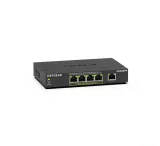
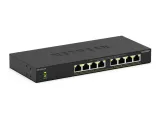
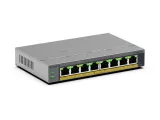
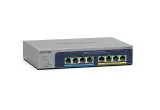
Four PoE switches made this list, each for a different job:
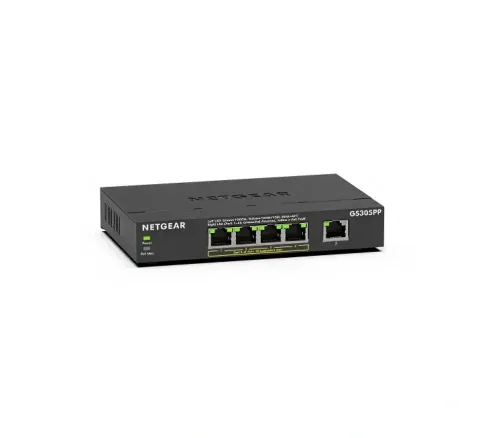
- NETGEAR GS305PPv3 for one to three powered devices, such as an access point and a camera or two.
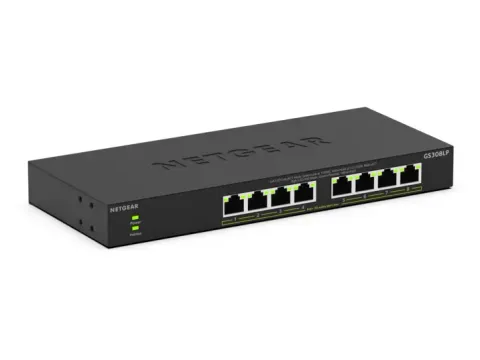
- NETGEAR GS308LP for several low-power devices, with room to raise its power budget later.
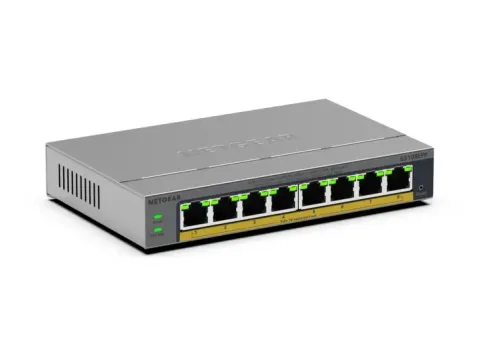
- NETGEAR GS108EPP for several PoE+ access points at once.
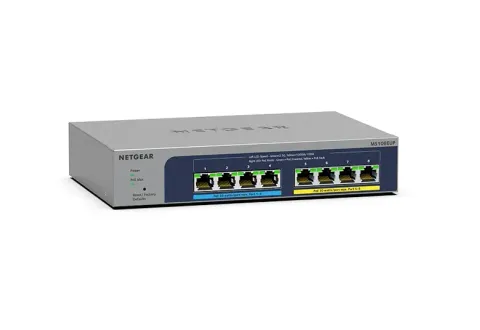
- NETGEAR MS108EUP for Wi-Fi 7 access points that need both PoE+ and more than gigabit.
We haven’t tested these switches ourselves. We picked them from NETGEAR’s specifications against the criteria below. This list covers NETGEAR switches whose power budgets we could confirm on NETGEAR’s own pages; other brands also make PoE switches, and we haven’t assessed them yet.
First: do you need a PoE switch?
If you’re powering one device, an injector on an existing switch or router port may be all you need. A PoE switch earns its place once you have two or more PoE devices in the same spot, such as a closet feeding ceiling access points and cameras. What is PoE? explains the standards and the injector-or-switch choice. If you need fast ports but no power, the best multi-gig switches are the better list.
The criteria that decide it
- The total power budget. Every PoE switch shares a fixed amount of power across its ports. Add up what your devices need at most, then leave headroom.
- The PoE standard per port. Some access points need PoE+ (802.3at). eero, for example, says its Outdoor 7 won’t run properly on standard 802.3af PoE. All four picks offer at least PoE+ on their powered ports.
- Port speed. Gigabit is enough for most cameras and Wi-Fi 6 access points. A Wi-Fi 7 access point with a 2.5 or 10 Gbps port needs a multi-gig switch to run faster than 1 Gbps.
- Unmanaged or Easy Smart. Unmanaged switches need no setup. NETGEAR’s Easy Smart models add settings such as VLANs, which help if you want cameras or guest access points on their own network segment.
- Noise. All four picks are fanless.
How the four compare
| Pick | Ports | Powered ports | Total budget | Type |
|---|---|---|---|---|
| GS305PPv3 | 5 × 1 Gbps | 4 × PoE+ | 83 W | Unmanaged |
| GS308LP | 8 × 1 Gbps | 8 × PoE+ | 60 W (83 or 123 W with optional PSU) | Unmanaged |
| GS108EPP | 8 × 1 Gbps | 8 × PoE+ | 123 W | Easy Smart |
| MS108EUP | 8 × 2.5 Gbps | 4 × PoE+, 4 × PoE++ | 230 W | Easy Smart |
GS305PPv3. Five gigabit ports, four of them PoE+ at up to 30 W each. NETGEAR’s datasheet gives an 83 W total budget; one line on its product page says 120 W, but the page’s own specification table and the datasheet both say 83 W, so that’s the figure to plan with. That covers two PoE+ access points at their full 25.5 W, with some to spare. NETGEAR’s GS105Pv3 looks similar but has a 63 W budget.
GS308LP. All eight ports are PoE+, but the budget as supplied is 60 W, which NETGEAR says can be raised to 83 W or 123 W with an optional power supply. It suits a handful of cameras or low-power devices now, with a path to more later.
GS108EPP. Eight PoE+ ports and a 123 W budget, enough for four PoE+ access points at full power. It’s an Easy Smart switch, so you can set up VLANs or simply leave it at defaults.
MS108EUP. The only multi-gig pick: eight 2.5 Gbps ports, four PoE+ and four PoE++ (802.3bt), with a 230 W budget. It’s the one to choose for Wi-Fi 7 access points with 2.5 Gbps ports, or for higher-power PoE++ devices.
Why this list is short
We only include switches whose PoE power budgets and port types we could confirm on the manufacturer’s own pages. NETGEAR’s pages contradict themselves on a few other models’ budgets, so those are left out until the figures are clear. Prices aren’t listed because they change constantly. Each “Check price on Amazon” button opens an Amazon search for that exact model.